
Unlocking Corporate–Startup Co-Innovation with AI
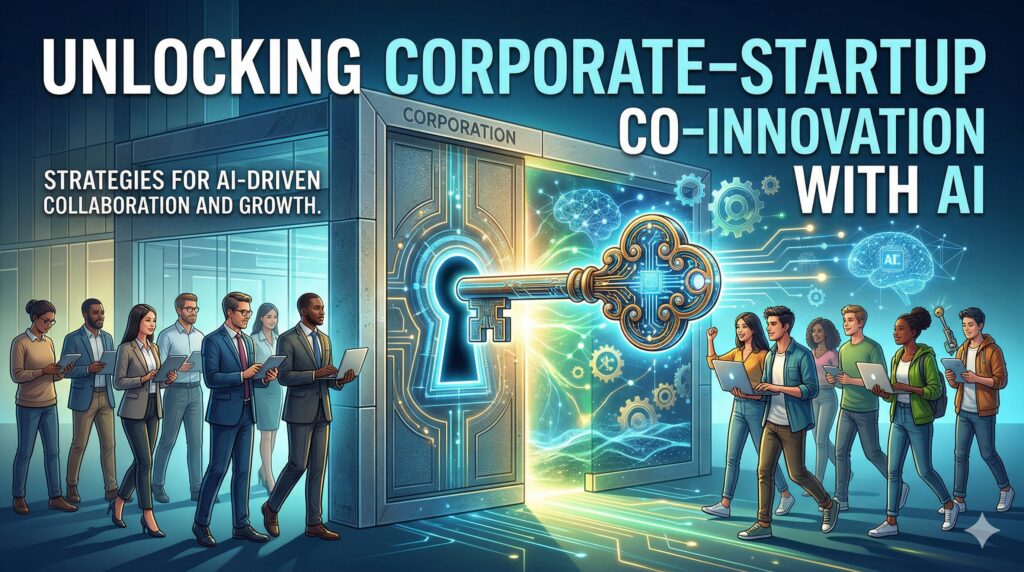
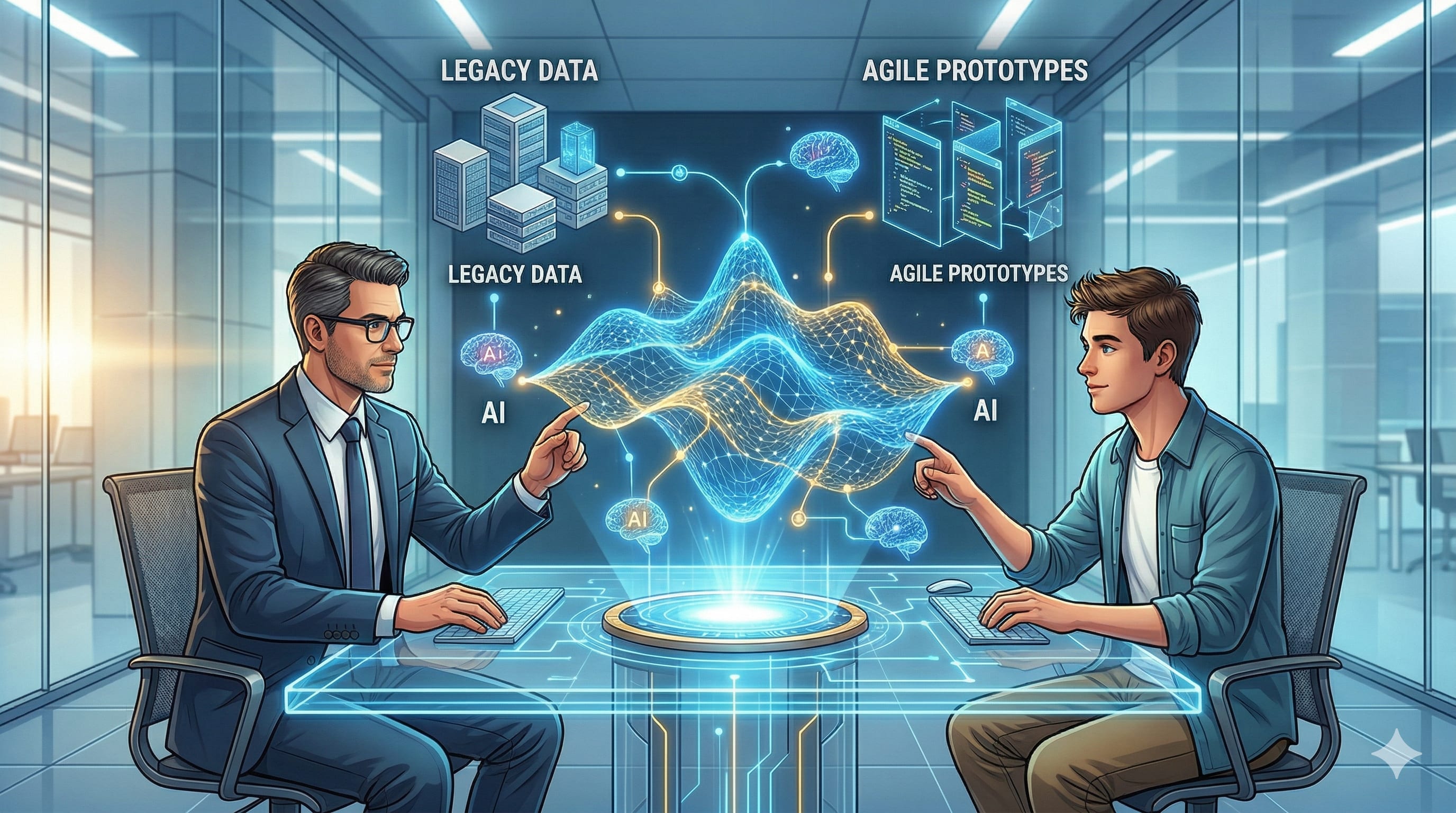
Traditional innovation models are breaking down, and the problem is structural. These models cannot fully reconcile the differences in pace, incentives, and workflow complexity between larger organizations and startups.
As we know, “AI-driven co-innovation is less about the technology itself and more about the cultural shift it enables. It forces both sides to rethink how they trust, share, and build value in a networked economy.”
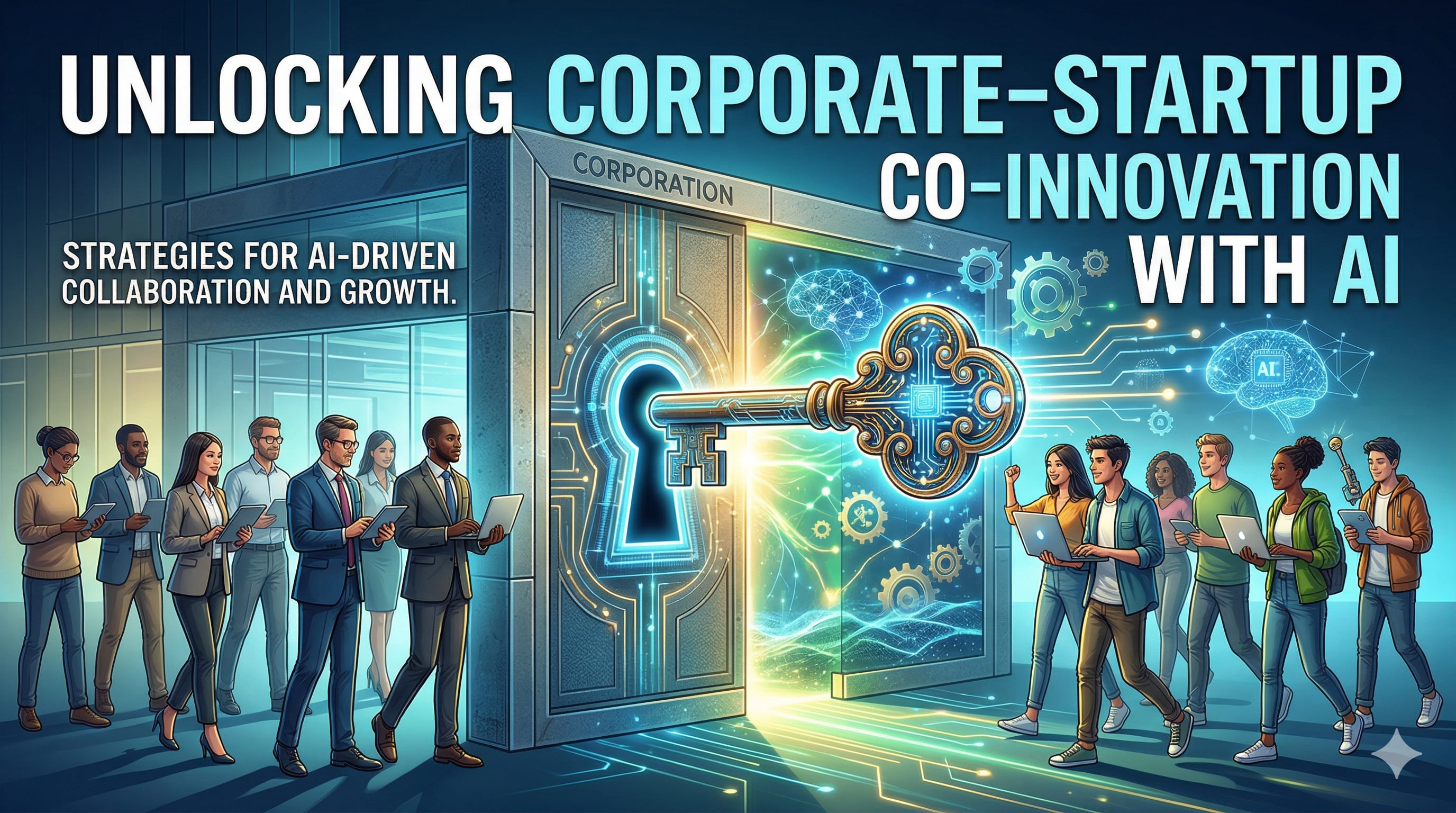
This is because these two organizations have existed on opposite ends of the spectrum.
Corporations bring scale, access to capital, and data, while startups bring speed and experimentation. In theory, they complement each other, and these attributes should spark innovation, but the reality is not as expected.
AI is changing that dynamic. Gone are the days when industries hoard resources. Through shared infrastructure and experimentation, a connective layer is being built where corporations and startups work together more effectively. McKinsey states that AI-enabled co-innovation ecosystems are growing, where value is created when organizations collaborate continuously.
The growth of corporate-startup collaboration:
Corporate and startups have partnered for years, but the structure of this partnership has remained unchanged.
Traditional methods of this collaboration include partnerships through accelerator and incubator programs, corporate venture capital investments, and partnerships and pilot programs.
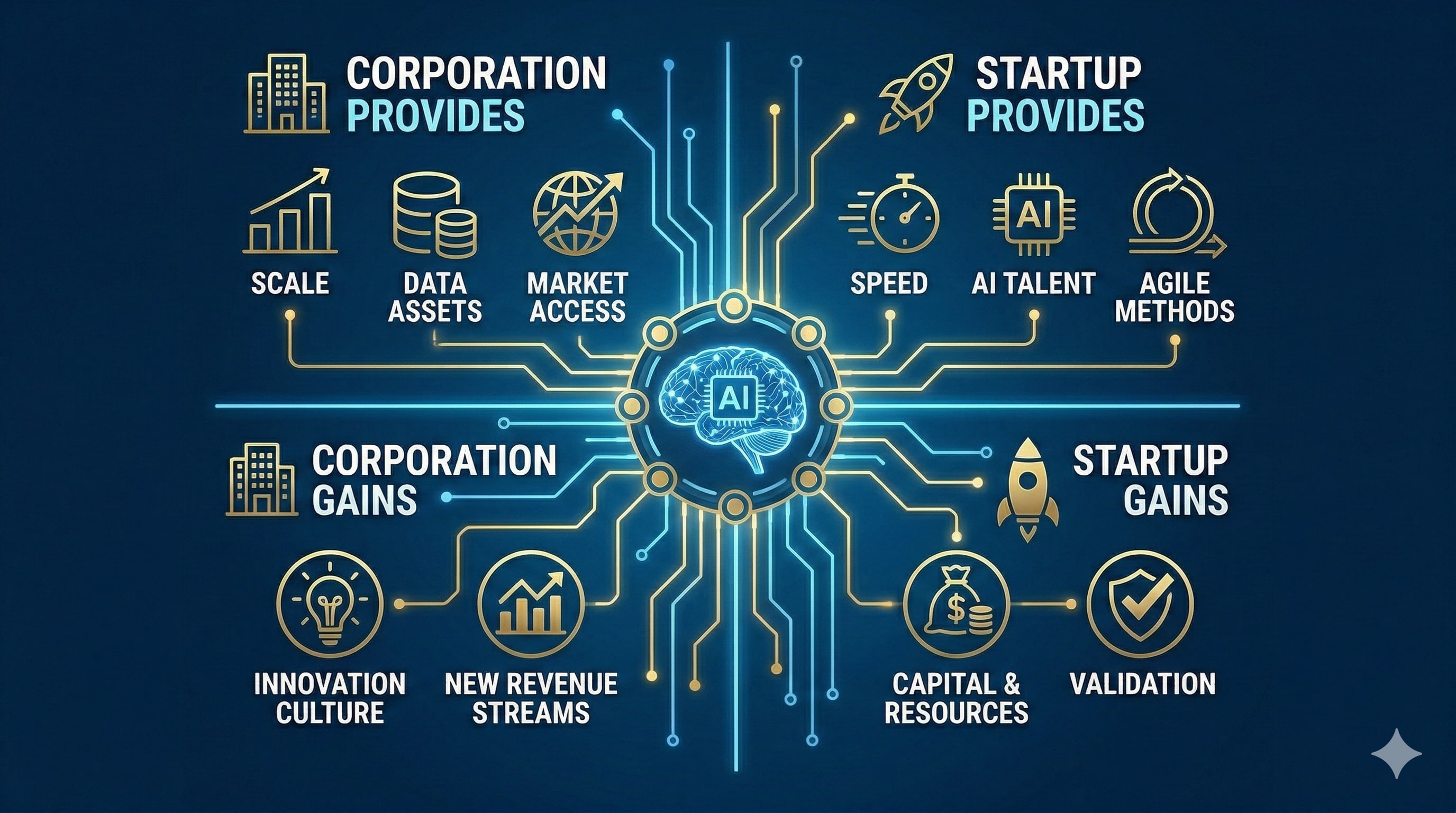
Though these methods were successful, they had clear limitations, which include: slow integration into large enterprise systems, unequal incentives between stakeholders, and an inability for startups to scale beyond initial pilot phases. This means promising ideas and solutions never reach full-fledged production.
The emerging shift from this restrictive corporate-startup performance is one that promises a move from transactional partnerships, where each party is only concerned about their rewards, toward a more integrated, system-level collaboration.
How AI is supporting co-innovation:
AI is performing a significant part in changing the norm. It accelerates innovation by restructuring how corporations and startups work together.
This is done through:
● Shared AI assets like cloud platforms, APIs, and core foundation models made accessible to both parties.
● Ensuring data collaboration through secure data sharing in controlled environments
● Rapid experimentation through generative AI for faster prototype generation and efficient iteration cycles
● Agentic systems for AI agents that coordinate workflows, automate tasks, and bridge gaps in operations.
In practice, projects move faster from idea to deployment. Corporate and startup teams are better aligned, and there is room for opportunity and scalable collaboration beyond pilots.
Microsoft and OpenAI case study:
The relationship between Microsoft and OpenAI is one of the clearest examples of AI-enabled co-innovation. What started as a strategic investment has evolved into a strong collaboration. Now, OpenAI’s models are deeply embedded into Microsoft’s cloud and enterprise products.
With this structure, innovation moves seamlessly from research to deployment. This method leverages Microsoft’s infrastructure and distribution with OpenAI’s unique focus on model development.
The impact of this collaboration has grown AI capabilities across enterprise environments. Microsoft has transformed experimental AI into widely deployed systems globally by integrating advanced models into Azure and productivity tools. This is a partnership that shows how shared infrastructure, aligned incentives, and continuous integration can make collaborating with startups an innovation engine rather than a onetime initiative.
The Hidden Challenges:
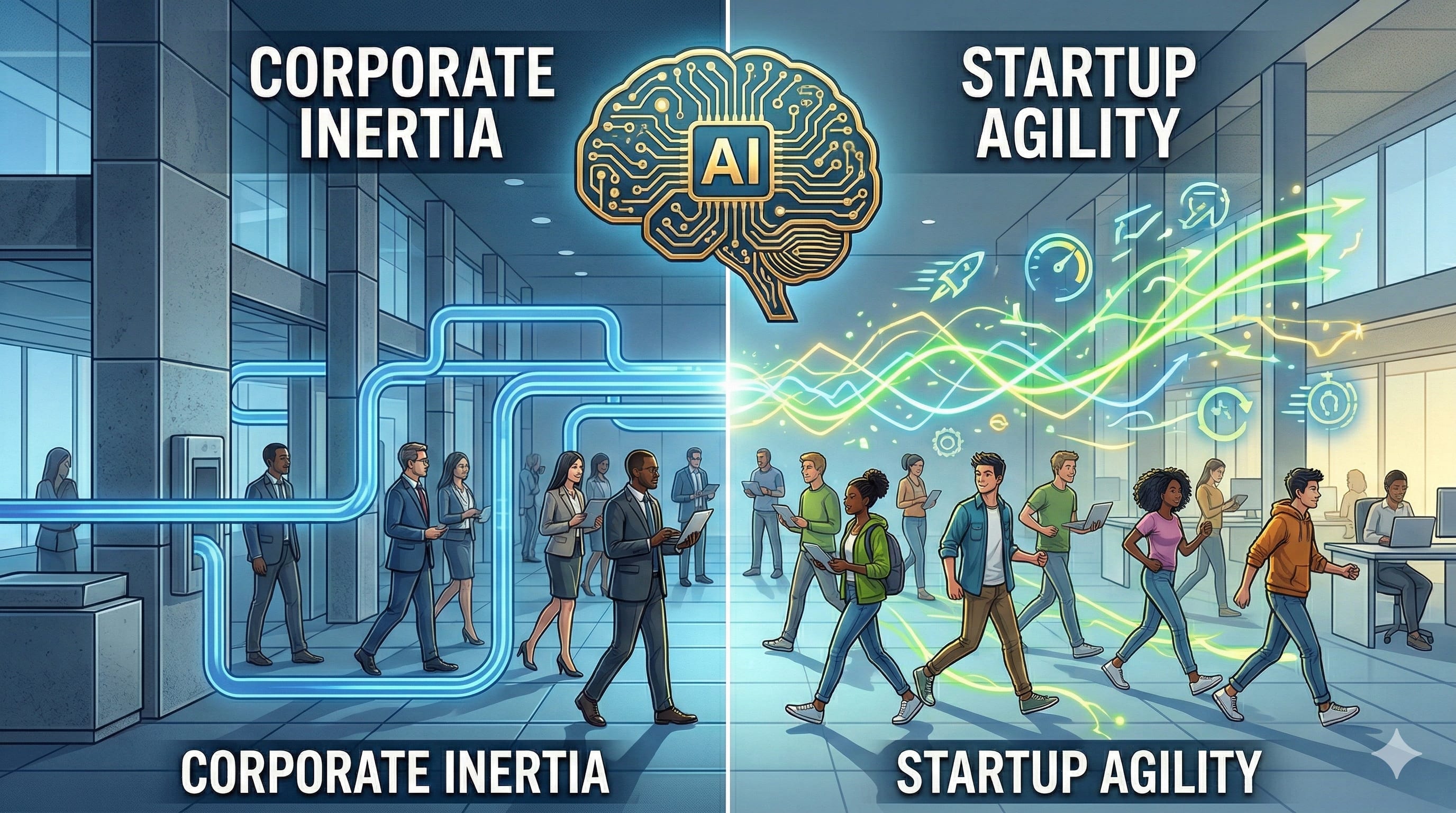
Despite the attractive promise of AI-enabled co-innovation, execution remains an issue. A breakdown in alignment between systems, data foundations, and stakeholders is the core reason collaboration has failed on many projects.
Other challenges are;
-
Organizations lack data infrastructure
-
Weak oversight across governmental frameworks and control gaps
-
Misaligned incentives among corporations and startups
-
Integration complexity with fragmented systems and incompatible architecture.
Gartner predicts that 60% of AI projects will be abandoned by 2026 due to poor data readiness. This highlights how foundational data issues remain a roadblock for innovation.
A word from IBM reports that nearly three-quarters of organizations lack sufficient AI risk and governance coverage. Broader industry analysis shows a clear gap between AI strategy and real-world implementation, and this gap persists. As AI adoption grows, these challenges remain and show that innovation is outpacing the right infrastructure to support its growth.
Conclusion
In the present, what is changing is the volume and depth of every collaboration. AI is improving real-time coordination, data environments, and ensuring product iteration is seamless across different organizational boundaries. Major players are also doubling down on partnership-led innovation models, through direct investment, ecosystem platforms, or structured alliances. This is because organizations understand that no single organization can own the entire AI stack.
Looking to the future, this model will become more widely used. Successful organizations will approach co-innovation as a system rather than as standalone businesses. These organizations will invest in flexible architectures, establish governance frameworks, and design workflows that allow startups and enterprises to work together seamlessly.
The defining advantage will lie in how organizations connect ideas, capabilities, and systems across ecosystems effectively. Those who can do this at scale will be the ones to drive innovation.
“AI is not improving innovation. It is redefining the environment where innovation lives”.
